Last Land: Empire Builder
- 4.2
- Rating
- 10.00M
- Installs
- Free
- Price

 Analysis by App-foxy
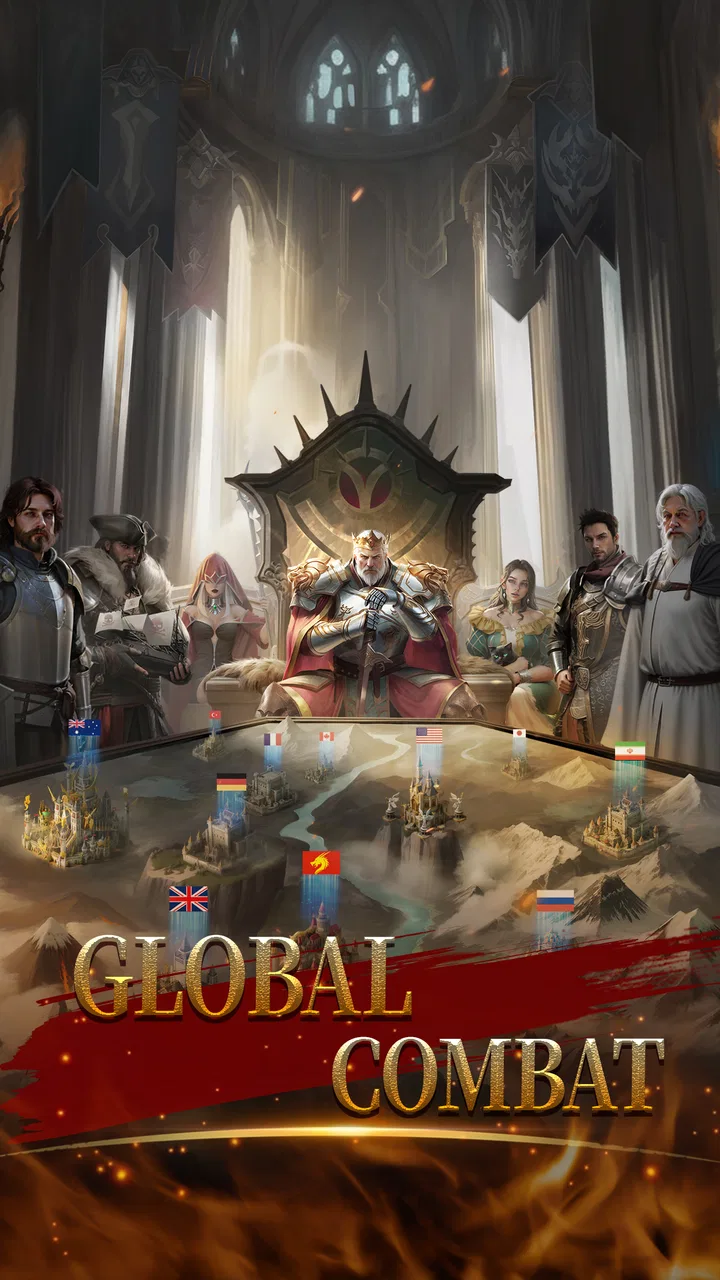
Last Land: Empire Builder is the kind of strategy game I open when I want more than a quick puzzle but do not want to commit to a long console-style session. It puts a medieval settlement, army, and rival players in the same loop, so every decision has a practical consequence: what I build affects my economy, what I research affects my defenses, and how I use my troops shapes the next real-time battle. That combination gives it a stronger sense of purpose than a simple base-building game.
After spending time with it, I see why it has attracted a large audience. The game is free to start, works on Android devices running version 7.0 or later, and comes from LEME GAMES. Its current version is 5.77.0, while the project itself dates back to February 16, 2019. That long presence matters because this is not a tiny experiment that feels unfinished; it is an established mobile strategy experience with a substantial player community.
My recommendation is fairly specific. If you enjoy checking a growing medieval domain several times during the day, planning upgrades, and testing yourself against other people, this is worth trying. If you want a self-contained campaign, a relaxed city builder with no pressure, or a strategy game that can be mastered in a few minutes, I would look elsewhere.
You May Also Like

 AccuWeather: Weather Radar
AccuWeather Review: A Quick, Clear Forecast for Everyday Decisions
For everyday plans, the best forecast is the one you can understand quickly. AccuWeather makes rain timing, radar, and local conditions easy to act on, with a few trade-offs.

 Hill Climb Racing
Why Hill Climb Racing Still Turns Crashes Into One More Run
A tiny car, a bumpy hill and one more upgrade: Hill Climb Racing keeps resurfacing because its simple chaos makes every near-miss feel personal.

 AliExpress - Shopping App
AliExpress Makes Global Shopping Feel Personal, but Shoppers Bear the Risk
AliExpress turns a global marketplace into a pocket-sized discovery engine. Its reach is useful, its shopping loop compelling, and its trade-offs easy to miss.

 Lords Mobile: Kingdom Wars
Lords Mobile Is a Kingdom-Building Routine, Not a Quick Match
A case-by-case verdict on the building, battles, device demands, and social commitments that make Lords Mobile rewarding for some players and exhausting for others.

 PDF Scanner app - TapScanner
TapScanner Makes Paperwork Easier to Capture, Check, and Share
TapScanner makes scanning with a phone feel less like a rescue operation and more like a dependable step in getting work done. Its capture tools are useful, though not flawless.

 Block Blast!
 Shows How Much a Puzzle Game Can Leave Out
A quiet grid game shows why puzzle players increasingly value instant clarity, repeatable skill and low-pressure play—and where the genre still needs to catch up.
More From Our News Desk
View All News


How the current game feels to play
I approach the day-to-day loop as a sequence of small commitments rather than a checklist to clear. A quick visit is useful when I can identify one priority—keeping development moving, shoring up preparation, or deciding whether a battle makes sense—then stop before I start making rushed choices. That framing helps explain the practical settings and habits worth considering next.
A medieval base builder with a competitive center
The basic appeal is easy to understand: I develop an empire, prepare an army, and take that progress into battles against other players. The medieval setting gives familiar systems a clear identity. Buildings, resources, military preparation, and territorial ambition all make sense within the theme, so the game rarely feels like a collection of unrelated menus.
What separates it from a purely decorative settlement builder is the importance of readiness. I cannot treat construction as an isolated activity because a stronger economy is useful only when it supports defense or expansion. Likewise, an army is not enough on its own if my development falls behind. The most satisfying moments come from keeping those parts moving together rather than focusing on one impressive-looking area.
The real-time PvP focus also changes the rhythm. A single-player builder lets me optimize at my own pace, reload a mistake, or ignore military concerns entirely. Here, other players give my decisions weight. I find myself thinking about whether an upgrade is improving immediate survival, opening a better long-term path, or simply satisfying my urge to make the settlement look stronger.
What a normal play session looks like
A realistic session might begin during a short break. I check the settlement, collect what is ready, start the next useful improvement, and review my military position. If I have enough preparation, I move into a battle; if not, I use the time to improve the economy or adjust my plans. That makes the game suitable for several brief visits rather than one uninterrupted sitting.
The trade-off is that this rhythm can become demanding. A player who enjoys constant optimization may appreciate having meaningful decisions waiting throughout the day. Someone who prefers to play only when inspiration strikes may feel that the game is asking for attention at inconvenient moments. I would not describe it as a passive idle game, even though some progress can happen between sessions.
For me, the best approach is to give each visit a purpose. Instead of opening the game and tapping every available button, I decide whether the session is about economic growth, military preparation, or an actual confrontation. That small habit reduces wasted actions and makes the empire feel planned rather than cluttered.
The first decisions matter more than they appear
New players may be tempted to upgrade whatever is immediately available. I made that mistake at first. A shiny new building feels rewarding, but a balanced foundation usually helps more than a single advanced structure that leaves the rest of the settlement weak. I now think in pairs: development that improves my ability to sustain an army, followed by military preparation that protects the development.
Another useful habit is to avoid treating every battle as mandatory. PvP is central, but entering a fight without a clear reason can consume momentum. I get more from battles when I already know what I am testing: whether my current army can handle a particular threat, whether my defensive choices are holding, or whether I need to return to development before competing again.
This is one of the less obvious strengths of the design. The game rewards a player who can delay gratification. Building immediately is not always the best move, and fighting immediately is not always the brave move. Sometimes the strongest decision is to spend a session preparing for the next one.
Real-time PvP is exciting, but it raises the pressure
The competitive battles provide the clearest reason to keep returning. Human opponents make victories feel more personal than defeating predictable computer-controlled enemies. Even when I lose, the result can reveal a weakness in my preparation or decision-making. That feedback gives the strategy layer a purpose that a purely cosmetic empire builder would lack.
However, competitive play also exposes the game’s sharpest limitation. Progress and confidence can become closely tied to how often I am willing to engage. Players who dislike losing progress, comparing themselves with others, or adapting to stronger opponents may find the PvP layer stressful rather than motivating.
I also would not recommend approaching battles as a test of reflexes alone. The more useful mindset is to treat each fight as part of a broader plan. If I spend all my attention on the battle itself while neglecting the settlement, I eventually create a problem that one good result cannot fix.
What has changed, and what that means for players
The game’s version history gives me a reason to judge the present experience on its own terms, not to assume that every part has changed in a particular way. I focus instead on how a continuing strategy game asks me to adapt: keep my routine flexible, treat setbacks as feedback, and make sure the pace still suits me. The next section considers what that means for a player starting now.
A long-running game with a current version to evaluate
The move from its 2019 release to version 5.77.0 suggests an ongoing product rather than a one-off launch. I see that evolution mainly in the game’s overall maturity: there is a developed loop connecting the settlement, army, and competitive side, and the experience feels built around repeat play rather than a short introductory campaign.
It is important to separate that observation from speculation. A current version number tells me that the game has continued to receive updates, but it does not automatically mean every older frustration has disappeared. I still judge the experience by how clearly it explains its systems, how fairly it lets me make progress, and how comfortable the recurring play cycle feels.
For someone installing today, the practical benefit is access to a game that has had time to establish its identity. The downside is that a mature strategy title can feel dense. New users are stepping into a system with more history and more interconnected decisions than a freshly launched casual game.
How the established player base affects the experience
The game has an average rating of 4.2 from roughly one hundred forty-five thousand ratings, and it has passed ten million installs. Those figures point to broad interest, but they should not be treated as a guarantee that every player will enjoy the same aspects. A competitive strategy game can satisfy dedicated planners while frustrating people who mainly want decoration or quick entertainment.
In my experience, the large audience makes the multiplayer concept feel central rather than ornamental. I am not entering a world designed only for me; the game’s value depends on the presence of opponents and on the pressure created by comparison. That is a strength when I want a living competitive environment, but it is a weakness if I prefer games that remain equally enjoyable without other players.
It also means that newcomers should resist comparing their early settlement with advanced accounts. The better question is whether each session improves my understanding and position. Chasing someone else’s apparent progress too soon can push me into inefficient upgrades or poorly timed battles.
Free access and the cost of convenience
Last Land is free to download and play, which makes trying the core loop straightforward. The game includes in-app purchases ranging from $0.99 to $99.99 per item. I consider that an important part of the decision, not a footnote, because strategy games with long-term development can make convenience feel unusually attractive.
My advice is to decide before playing what kind of experience I want. If I am comfortable progressing patiently, the free entry point is appealing. If I know I become frustrated whenever another player advances faster, I should be careful with spending. The most expensive option is not automatically necessary, and buying something simply because I feel behind is usually a sign that I should close the game for a while.
The trade-off is not only financial. Purchases can change how I perceive the pace of the game. If progress feels satisfying when earned gradually, the long-term loop has value. If waiting becomes the main experience, the game may stop feeling like strategy and start feeling like a series of delays. That distinction will vary from player to player.
Who should play it, and who should skip it
I would recommend it to players who enjoy planning around limited time, checking a developing base, and making decisions that matter later. It is particularly suitable for someone who likes the overlap between city management and competitive battles. The medieval theme is accessible, but the real attraction is the connected progression rather than the setting alone.
I would skip it if I wanted a story-led medieval adventure, a calm offline builder, or a match-based strategy game where every round starts from zero. Those alternatives offer cleaner boundaries. Last Land asks me to care about continuity, and that can feel like work when I only have the energy for a short, consequence-free game.
The Teen content rating is another useful signal for families. I would still treat it as a competitive online strategy title rather than a simple children’s building game. The age label helps set expectations, but parents should also consider whether the spending model and player-versus-player pressure fit the person using the device.
Three habits that improved my results
First, I separate maintenance sessions from ambition sessions. During a quick visit, I handle the safest useful tasks and avoid starting a battle just to feel active. When I have more time, I review the wider plan and make a deliberate push. This prevents rushed decisions from damaging a day’s progress.
Second, I treat every upgrade as part of a chain. Before committing, I ask what it enables, what it delays, and whether my current army can protect the value it creates. This is more effective than selecting the option with the largest immediate number because it keeps the settlement and military working together.
Third, I use losses as planning information rather than as a reason to spend immediately. A defeat may point to weak preparation, poor timing, or an economy that cannot support the way I am playing. Identifying that cause is more valuable than trying to erase the feeling of losing with a purchase.
These habits are not flashy features, but they changed how I experienced the game. They also reveal the central trade-off: Last Land rewards attention and patience more than random bursts of activity.
Where the current experience still falls short
The connected systems can be engaging, but they also create friction. A newcomer has several things to understand at once: settlement development, resource priorities, military readiness, and the consequences of PvP. Even when each part is reasonable, the combination can make the opening hours feel busier than expected.
The long-term structure may also test patience. Players who prefer immediate variety can find repeated development tasks less exciting than a sequence of short campaigns. The game’s appeal grows when I enjoy gradual improvement, so it is not a universal replacement for faster strategy titles.
There is also a social pressure that comes with a large competitive environment. I may understand what I should do and still feel behind. That feeling is not necessarily a flaw in one particular mechanic; it is a natural result of persistent PvP. Still, it is worth acknowledging before investing time or money.
What I would watch in future updates
Because the game is already at version 5.77.0, I would pay attention to how future updates balance accessibility for newcomers with depth for established players. New systems can keep veterans interested, but too much added complexity can make the entry point harder to understand.
I would also watch the relationship between free progression and paid convenience. The healthiest version of this type of game is one where patience remains a meaningful strategy and purchases feel optional rather than necessary for basic participation. That balance will strongly affect whether I keep recommending it to friends who are cautious about spending.
Finally, I would look for improvements that make planning clearer without removing meaningful choices. The best update would not simply add more content; it would help me understand why a decision matters, what it costs over time, and how it connects to the next battle. That would benefit both new players and experienced commanders.
My final recommendation
Last Land: Empire Builder is a substantial free strategy game for people who enjoy a persistent medieval domain and real-time competition. I like that the settlement is not just a backdrop for battles: economic decisions, preparation, and timing all influence how confident I feel when facing another player.
It is not the right choice for everyone. The ongoing nature can feel demanding, the learning curve is more involved than a basic builder, and the purchase range means I would approach spending carefully. Players looking for a quiet, offline experience should choose another style of game.
For me, the deciding factor is whether I want a game to revisit and manage rather than simply finish. If the answer is yes, I think this is a worthwhile download. Its strongest quality is the way everyday settlement decisions eventually become competitive decisions. I would start for free, establish a patient routine, and only consider purchases after I was sure the long-term PvP loop genuinely suited me.
FAQs for Last Land: Empire Builder
01What is Last Land: Empire Builder?
Last Land: Empire Builder is a strategy and empire-management game centered on building a powerful settlement, expanding your territory, gathering resources, and competing with other players. You typically develop buildings, train troops, research upgrades, and make decisions about defense and conquest. The game combines city-building mechanics with real-time or asynchronous strategic planning, so progress depends on both smart resource management and effective military choices.
02Is Last Land: Empire Builder free to download and play?
Last Land: Empire Builder can generally be downloaded and played for free, although the game may include optional in-app purchases. These purchases can provide premium currency, resource bundles, speed-ups, or other advantages that help reduce waiting times and accelerate development. You can usually make steady progress without paying, but advancing quickly or competing at the highest level may require patience, careful planning, or occasional spending.
03Does Last Land: Empire Builder require an internet connection?
An internet connection is normally required for Last Land: Empire Builder because many of its core features depend on online services. Account synchronization, multiplayer interactions, events, rankings, alliances, and server-based progress cannot work properly offline. A stable Wi-Fi or mobile-data connection is recommended, especially during battles or timed activities. Availability of certain features may also depend on server maintenance and regional support.
04Is Last Land: Empire Builder suitable for beginners?
The game is accessible to beginners, but new players should expect a learning period because it contains several connected systems, including construction queues, resource production, troop management, research, missions, and alliance activities. Early tutorials and introductory objectives help explain the basics, yet long-term success requires prioritizing upgrades and avoiding wasteful spending. Players who enjoy gradual progression and strategic decision-making will likely find the experience easier to understand.
05What should I know about gameplay, purchases, and device requirements before downloading?
Before downloading Last Land: Empire Builder, make sure your Android or iOS device has enough free storage and meets the minimum operating-system requirements listed on its official store page. The game may use considerable battery and data during extended sessions, particularly when displaying animated maps or multiplayer content. Also review the in-app purchase settings, privacy information, and account-login options, since progress may depend on connecting the game to an online profile.
Pros
- Deep empire-building systems reward long-term planning.
- Regular events keep the kingdom experience feeling active.
- Alliance features make cooperation and diplomacy worthwhile.
- Multiple upgrade paths support different play styles.
- The fantasy presentation gives the world a distinctive atmosphere.
Cons
- Progress can feel slow without frequent play or resource spending.
- The interface may seem overwhelming to new strategy players.
- Competitive events can favor highly active or paying users.
- Managing several timers and resources becomes repetitive over time.
- A stable internet connection is generally required for gameplay.

Last Land: Empire Builder
Gallery